Brake, Transmission, and Drivetrain Parts Guide
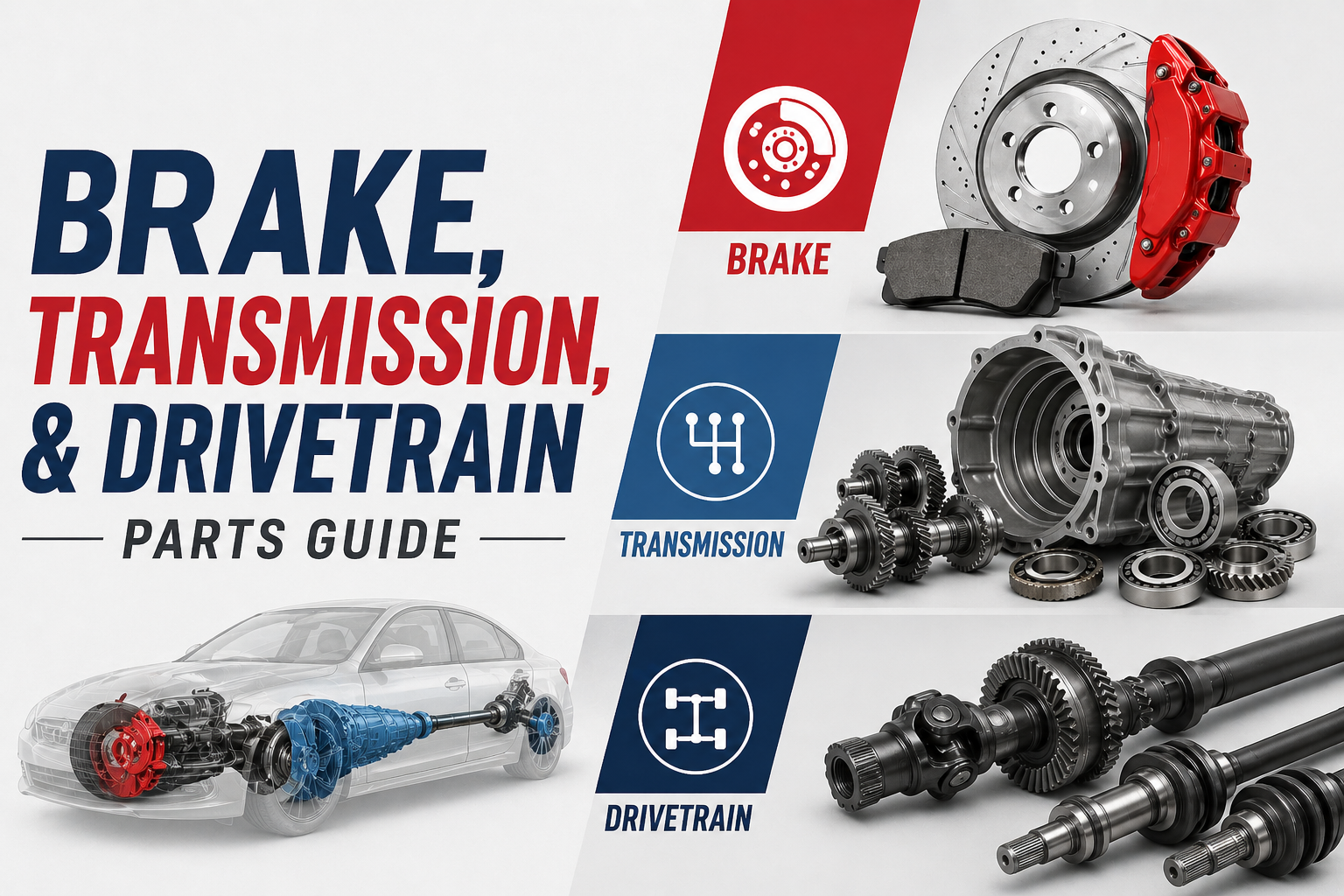
Brake, transmission, and drivetrain parts all affect how a vehicle stops, shifts, and transfers power to the road. A soft pedal, harsh shift, clicking axle, or driveline vibration may seem like separate problems, but each symptom points to a system that supports safety, control, and everyday drivability under load. This guide explains the main categories to inspect so buyers can move from symptom to the right repair path.
Why Brake and Drivetrain Maintenance Matters
Brake parts are safety-critical because they control stopping distance and pedal feel. Drivetrain parts are just as important for smooth power delivery, predictable acceleration, and long-term transmission life. When small issues are ignored, worn friction parts, old fluid, leaking seals, or damaged hardware can lead to larger repairs.
The best approach is to group symptoms by function. Braking concerns usually involve friction parts, hydraulic pressure, or ABS control. Shifting problems often involve fluid condition, filters, clutches, shifters, or torque converters. Clicking, whining, or vibration from under the vehicle may point toward axles, CV joints, differentials, driveshafts, or universal joints.
Brake Parts to Inspect
Routine brake service often starts with brake pads and shoes. Squealing, grinding, reduced stopping confidence, or longer stopping distance may mean the friction material is worn or contaminated. During that service, related brake hardware should be inspected so the new friction parts can operate correctly.
Hydraulic parts should be taken seriously. Cracked brake hoses or corroded brake lines can cause fluid loss, soft pedal feel, or reduced braking pressure. A failing master cylinder can also affect pedal travel and pressure, so master cylinder parts may be part of a deeper brake diagnosis.
Some brake systems also use drum-brake hydraulic parts. wheel cylinders and parts help apply drum brakes and may leak, stick, or contribute to uneven braking. If the ABS warning light is on, ABS system parts should be diagnosed before replacing unrelated brake components.
Common Brake Symptoms
A squeal or grind usually points first to friction parts. A pulsing pedal can suggest brake surface or hardware concerns. A soft pedal, fluid leak, or pedal that travels too far is more likely hydraulic. Pulling while braking can involve a sticking caliper, uneven friction material, brake hose restriction, or suspension-related alignment issue. Because braking directly affects control, visible fluid leaks or severe pedal changes should be inspected before the vehicle is driven further.
Transmission Service Parts
Transmission concerns range from basic maintenance to major replacement. Manual-transmission problems may include grinding, hard shifting, or gear engagement issues. In severe cases, complete manual transmissions may enter the conversation, especially when internal damage is beyond normal service.
Service parts can help when symptoms are tied to fluid quality or restricted flow. Transmission filters help control debris in the system, while the correct transmission fluid supports lubrication, cooling, and hydraulic operation. Old, low, or incorrect fluid can contribute to harsh shifts, slipping, delayed engagement, and heat-related wear.
Manual vehicles also require attention to clutch parts. Slipping, chatter, a changing engagement point, or difficulty selecting gears may point to clutch wear or related linkage issues. Driver input parts such as shifters should be inspected when gear selection feels loose, stiff, or inconsistent. Automatic-transmission symptoms such as shudder, stall-speed concerns, or slipping can involve torque converters. For less obvious needs, other transmission and drivetrain parts can help shoppers navigate broader repair categories.
Drivetrain and Axle Components
Once power leaves the transmission, drivetrain parts carry it to the wheels. differential parts help manage wheel speed differences, especially during turning. Whining, clunking, vibration, or leaks near the differential may call for inspection. Proper gear and differential oil helps protect gears and bearings under load.
Clicking during turns or vibration under acceleration can point toward CV parts or related axle parts. Driveline vibration at speed may involve universal joints and driveshafts, especially if there is clunking when shifting from park to drive or when load changes.
Brake Fluid, Transmission Fluid, and Gear Oil
Fluid type matters because each system depends on the correct viscosity, additives, and operating characteristics. Brake hydraulic parts depend on clean fluid and sealed lines. Transmissions need the correct fluid to shift and manage heat. Differentials need gear oil that can protect metal surfaces under pressure. Fluid service can help when maintenance is overdue, but it will not repair damaged gears, worn clutches, failed hydraulic parts, or broken driveline hardware.
OEM vs Aftermarket Brake and Drivetrain Parts
Brake and drivetrain repairs involve heat, pressure, friction, and precise fitment. OEM-style replacement parts are often chosen for safety-critical fit, compatibility with ABS and drivetrain systems, and predictable durability. Shoppers comparing options should consider not only the part price, but also labor time, related hardware, fluid requirements, and the cost of repeating the repair if a low-quality part does not fit or last.
Buying Tips
- Confirm transmission type before ordering transmission, clutch, or torque converter parts.
- Match brake parts by exact vehicle application, axle position, and brake system type.
- Replace related hardware, seals, filters, and fluids during major service when appropriate.
- Inspect leaks before replacing large components, especially transmissions or differentials.
- Do not ignore brake warning lights, ABS lights, grinding, or visible fluid loss.
Frequently Asked Questions
What causes a soft brake pedal?
A soft brake pedal can be caused by air in the brake system, low fluid, leaking brake lines or hoses, wheel cylinder issues, or master cylinder problems. Hydraulic symptoms should be inspected quickly because they can reduce braking pressure.
Can bad brake lines cause fluid loss?
Yes. Brake lines carry fluid pressure through the system. Corrosion, cracks, or damaged fittings can allow fluid to leak, which may cause a soft pedal, warning light, or reduced stopping power.
When should differential oil be replaced?
Differential oil should be replaced according to the vehicle’s service needs and inspected when there is whining, clunking, leaks, contamination, or severe-use driving. The correct gear oil helps protect differential gears and bearings.
Final Thoughts
Brake, transmission, and drivetrain problems are easier to navigate when symptoms are sorted by system. Start with the obvious safety concerns, inspect fluid condition and leaks, then match replacement parts to the exact vehicle configuration. That approach helps buyers choose the right repair category and avoid turning a minor service issue into a major repair.